Viazi: How African Farmers Fight Climate Change with Potato
In the fight against climate change, carbon offsets have become a vital tool for companies, institutions, and individuals seeking to balance their carbon footprint. Yet many offset schemes remain distant, complex, and abstract—focused on forestry or industrial projects that feel disconnected from everyday lives. Viazi offers a different path: a channel for donors and companies to invest directly in smallholder farmers in East Africa, creating measurable carbon savings while strengthening food security and improving livelihoods of farmers.
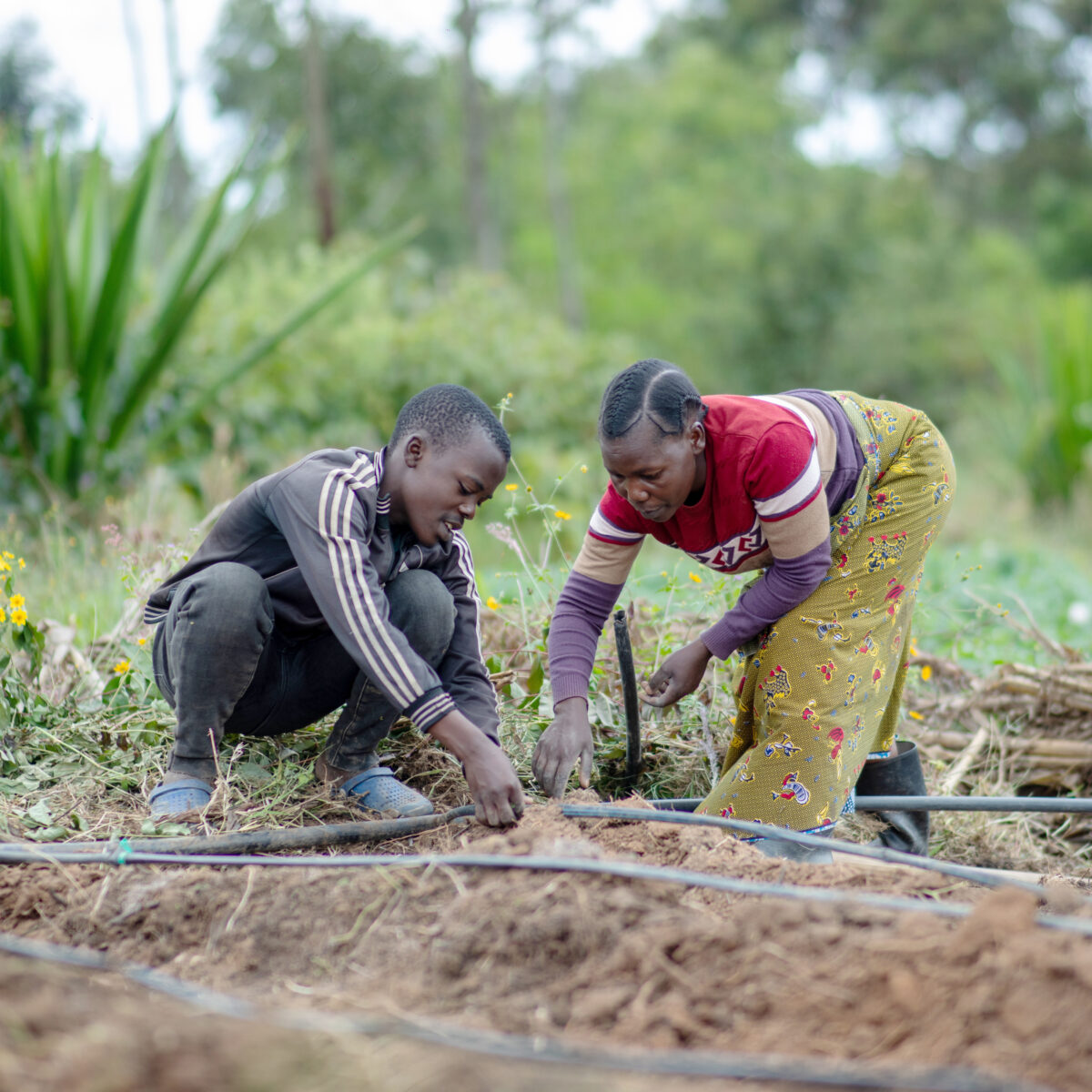
“Viazi,” meaning potato in Swahili, places one of the region’s most important staple crops at the center of climate action. Potatoes are not only rich in calories and nutrients but also highly efficient in water use and land productivity. When farmed sustainably, they deliver more food with a smaller climate footprint than cereals such as maize or wheat. By financing smallholder potato farmers to adopt climate-smart agriculture (CSA), Viazi enables both agricultural transformation and climate mitigation.
Larger yield, smaller footprint with tech-enabled potato farming
The carbon offset potential is significant. Traditional potato farming in East Africa yields around 8–14 tons per 5-acre farm, with high greenhouse gas intensity due to poor seed quality, inefficient fertilizer use, and post-harvest losses. Viazi’s model changes this equation. By providing certified seed potatoes, balanced fertilizers, biofertilizers, and access to solar-powered irrigation, farmers can achieve yields more than three to four times higher up to 40 tons per hectare (about 80 tons per 5 acres) on the same land. At the same time, emissions per kilogram of potatoes fall by about 50%. One analysis shows that sustainable potato farming can cut greenhouse gas emissions from 263 kg CO₂e per ton of potatoes to 128 kg CO₂e per ton, while dramatically increasing profits and reducing food waste.
This means each Viazi-supported farm can avoid around 7 tons of CO₂ emissions per year—the equivalent of taking 1.5 cars off the road. Unlike conventional carbon credit projects, which often take years to verify and trade, Viazi offers direct, transparent, and human-centered offsets. Donors do not simply buy a certificate; they finance real families, real fields, and real change.
Carbon offset with social impact
For companies striving to achieve net-zero targets, Viazi provides a tangible way to channel sustainability budgets into projects that deliver both carbon offsets and social impact. Contributions from individuals or corporate donors fund farm input packages and training. Farmers then repay, not with cash, but with improved livelihoods, higher yields, and a share of their increased profits reinvested in the community. This revolving model ensures scalability and sustainability without leakage or corruption.

Viazi thus bridges a critical gap: linking climate finance with everyday agriculture. While most carbon markets have focused on forestry and industrial emissions, staple crop farming remains underrepresented. Yet agriculture contributes roughly a quarter of global greenhouse gas emissions. Supporting smallholders in East Africa through climate-smart farming unlocks mitigation potential where it matters most—on the ground, in the fields, and in the lives of those who are most vulnerable to climate change.
For donors, companies, and individuals, Viazi offers more than an offset. It is an opportunity to align climate action with human impact—reducing global emissions while empowering farming families and strengthening regional food security. Every potato harvested through Viazi is not just food on a plate, but a step toward a cooler, fairer, more resilient planet and self-sufficient communities.
Learn more in our carbon compensation model in our white paper.
